Bespoke Wine Racks: 10 Questions Customers Ask Before Buying
Most bespoke wine storage projects begin with a fairly simple question: What could we do with this space?
It might be an empty area beneath the stairs, an unused wall in the dining room or a spare room that could become a wine cellar. The possibilities are exciting, but working out what’s practical, and what it might cost, isn’t always straightforward.
At Wine Racks UK, we speak to customers about these projects every day. Our online Wine Rack Helper has also given us an interesting insight into the questions people ask when they’re exploring their options.
We’ve brought together ten of the most common questions, along with some advice to help you get started.
1. How much does a bespoke wine rack cost?
It’s usually the first question, and it’s a perfectly reasonable one.
The difficulty is that two wine racks of exactly the same size can have very different prices. A simple rectangular installation in pine is relatively straightforward to manufacture. A triangular under-stairs design in solid oak, with integrated lighting and a wine fridge, is a different proposition altogether.
The biggest factors are the amount of racking required, the type of timber, the complexity of the space and any additional features.
Our advice is to start with the dimensions and work out which features really matter to you. You can always explore the more elaborate options once you have a sensible starting price.
Our Wine Rack Calculator is a useful place to begin.
2. Can you build a wine rack under the stairs?
Yes, and this is one of the most popular subjects raised with our online assistant.
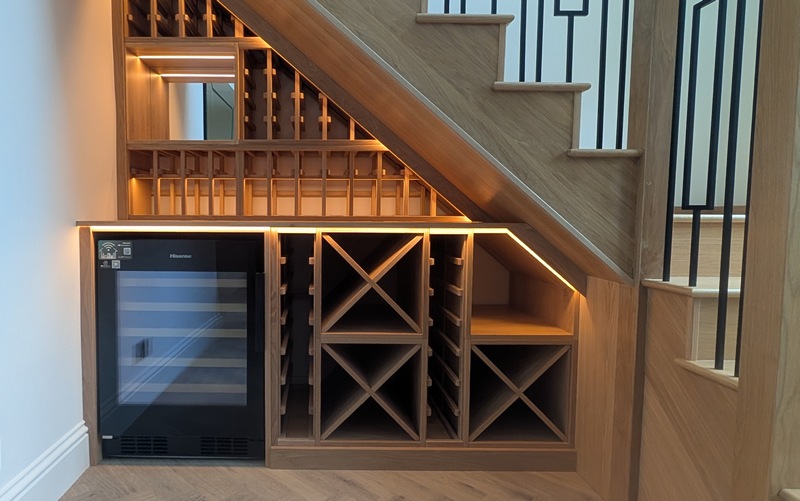
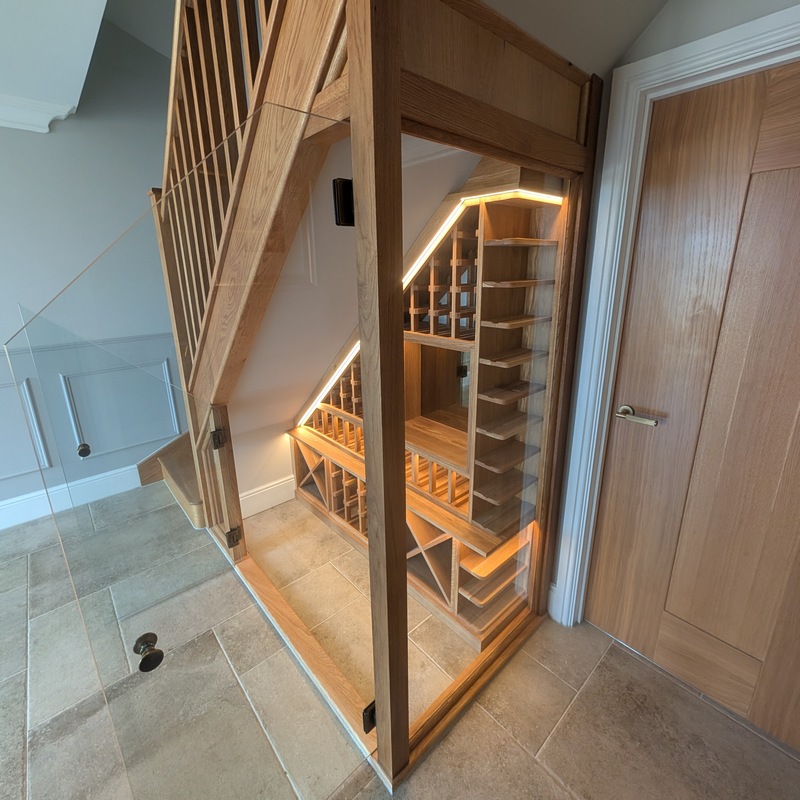
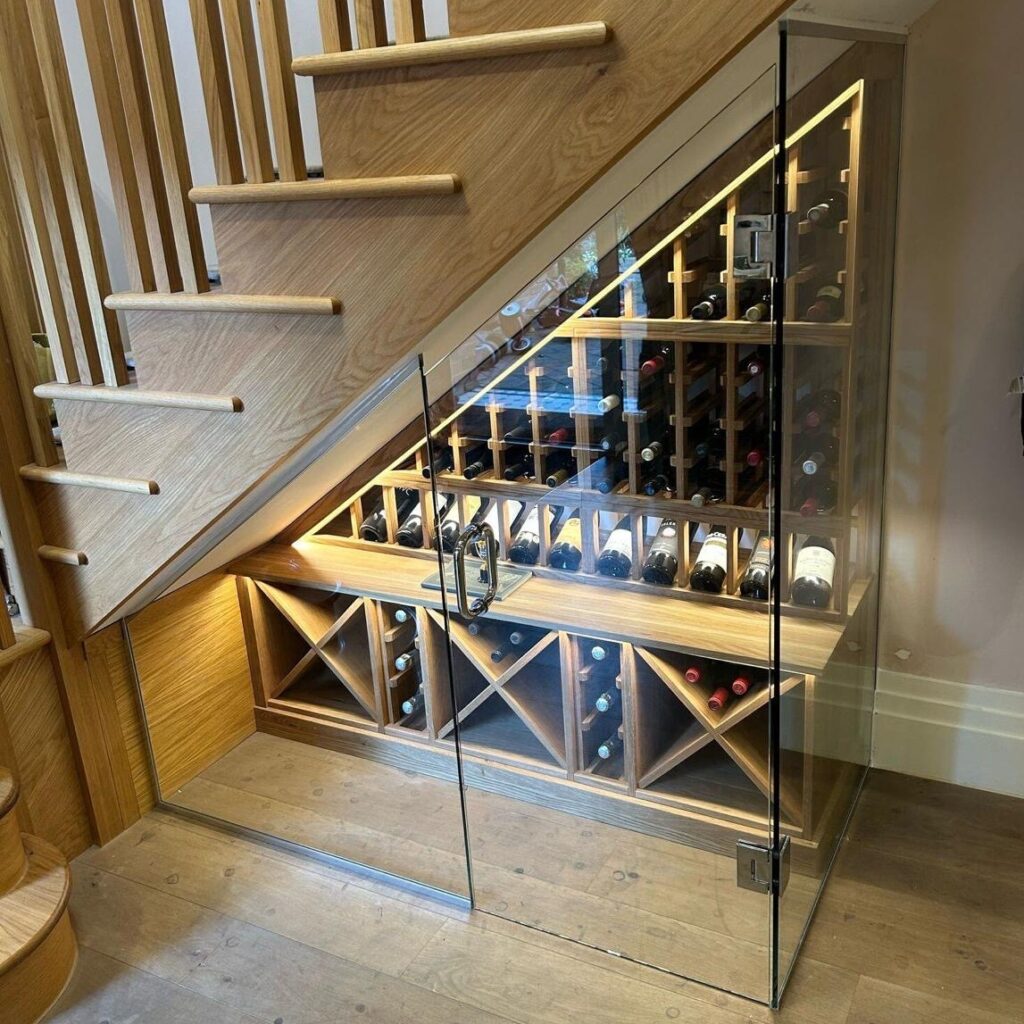
Under-stairs spaces are often awkward to use for conventional furniture, but they can work extremely well for wine storage. A relatively modest area can accommodate a substantial number of bottles, particularly when the layout is designed around the shape of the staircase.
Some customers want simple timber racking to make better use of the space. Others have something more ambitious in mind, with display shelves, integrated wine fridges, LED lighting or a glazed frontage.
The trick is making the awkward angles work for you rather than trying to force a standard cabinet into the space.
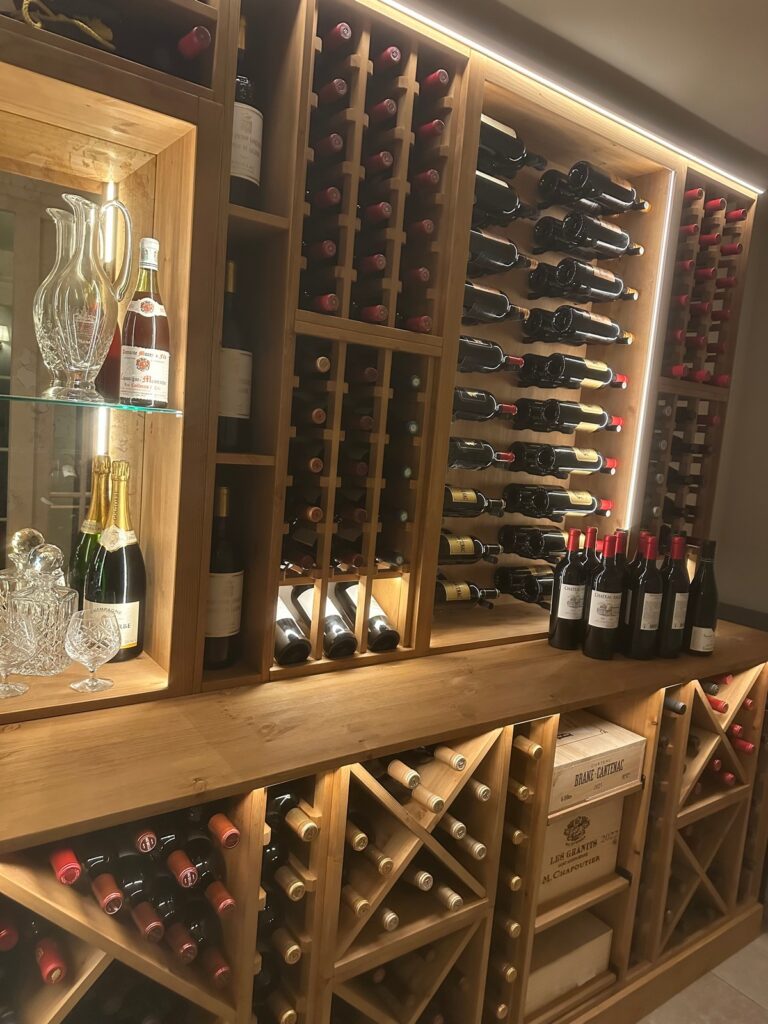
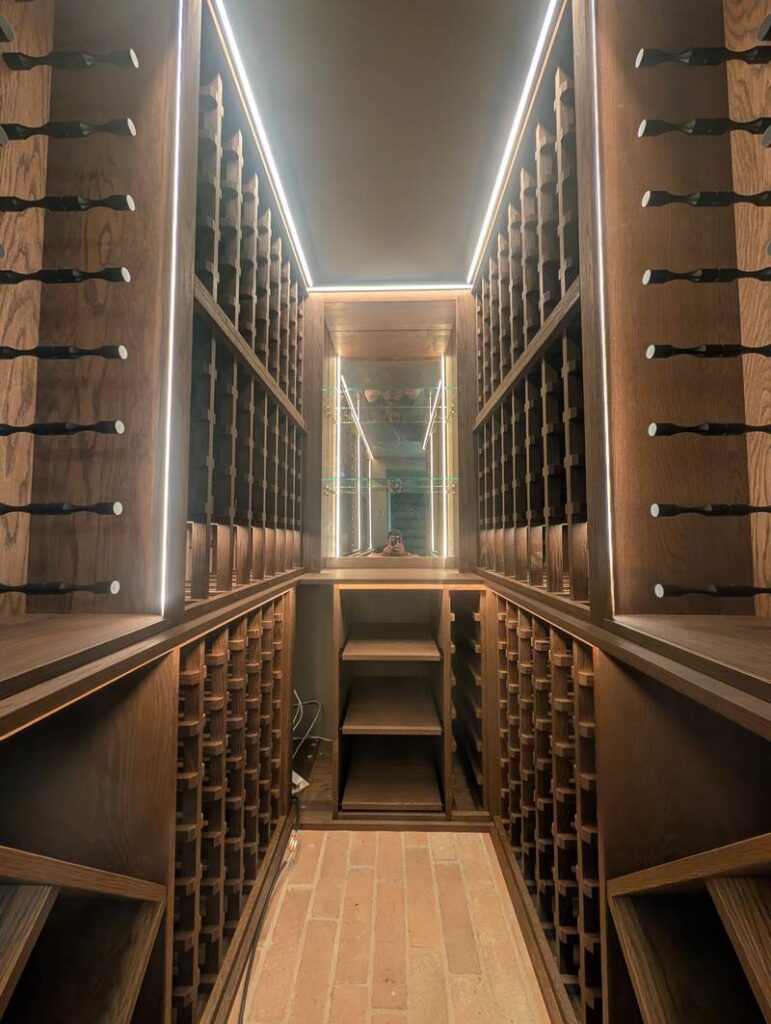
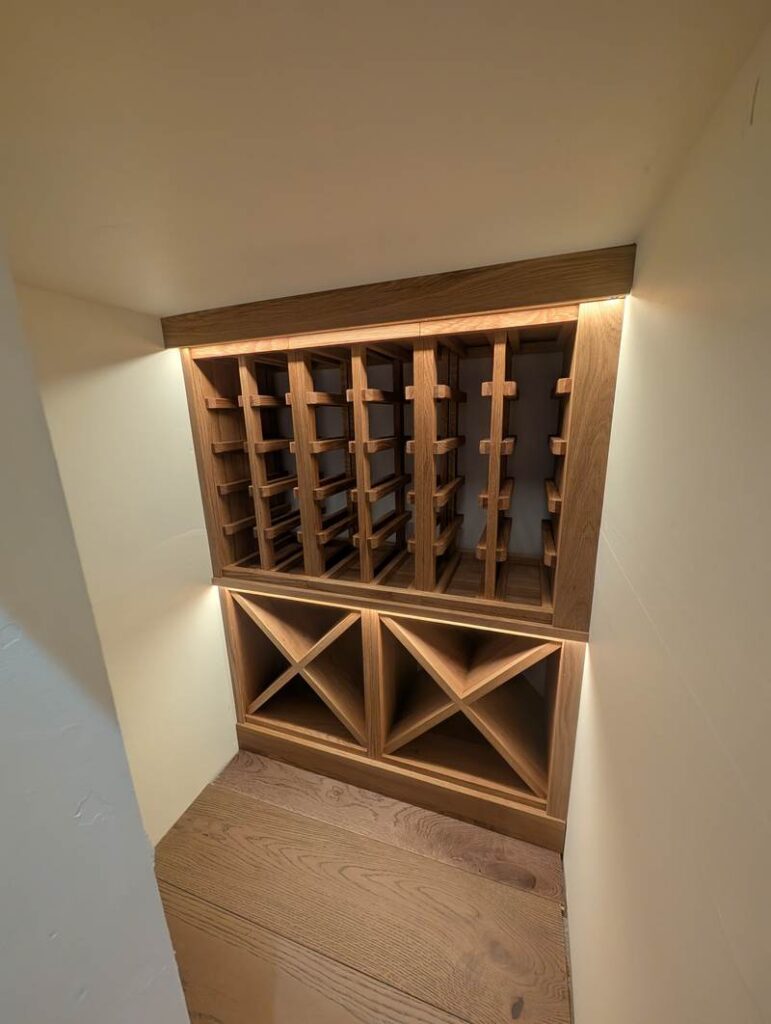
See some of our under-stairs wine cellar projects for ideas.
3. What measurements do I need?
You don’t need architectural drawings to start a conversation about a wine rack.
For a straightforward wine wall, we generally need the width and height of the area you want to cover.
For under-stairs storage, three measurements are particularly helpful:
- The horizontal length along the floor.
- The height at the tallest point.
- The available depth from front to back.
If you’re planning a complete wine room, measure each wall where you would like racking installed.
Don’t get too concerned about being accurate to the millimetre at this stage. Approximate measurements are normally enough for an initial discussion and materials estimate. Final measurements can be checked before anything is manufactured.
4. Is solid oak worth the extra money?
That depends on the look you’re trying to achieve, but there are good reasons why oak is such a popular choice.
Solid oak has a distinctive grain, a pleasing weight and a natural appearance that works particularly well in traditional and contemporary interiors. It’s often the obvious choice when the surrounding room already features oak doors, flooring or a staircase.
Pine is a good alternative if you’re working to a tighter budget. It can be stained in a range of shades, from lighter natural finishes to darker colours that suit a traditional cellar.
We’ve had customers initially assume they need oak, only to discover that stained pine offers the appearance they want at a lower cost.
It’s worth looking at examples of both materials before deciding.
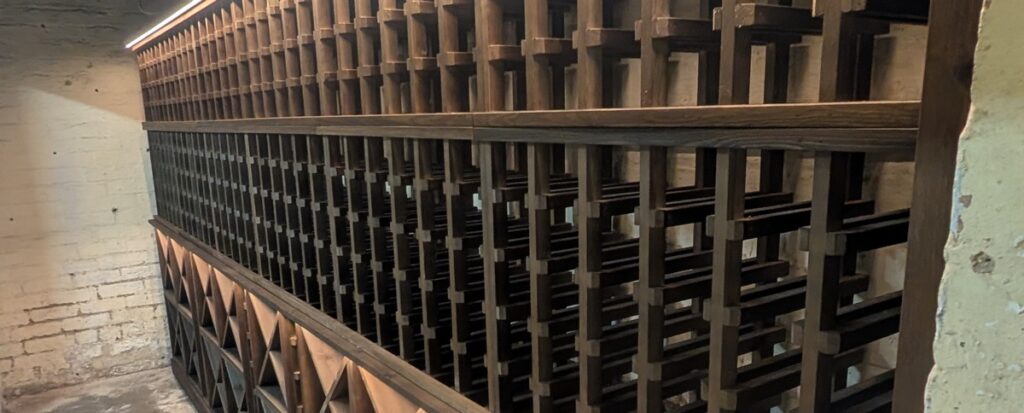
5. How many bottles will fit?
Surprisingly, this isn’t always an easy question to answer from the dimensions alone.
The number of bottles depends on how the space is arranged. Traditional individual compartments, bulk storage, display shelves and integrated wine fridges all use the available area differently.
For example, a wine rack designed purely to maximise storage capacity will generally accommodate more bottles than one incorporating generous display sections.
Depth matters too. If the space is deep enough, double-depth storage may be possible, although access to bottles at the back needs consideration.
Our advice is to tell us roughly how many bottles you currently own and how many you’d eventually like to store. That gives us a much better starting point than simply filling every available space with compartments.
6. Can I incorporate a wine fridge into the racking?
Yes. This is a particularly popular option for wine walls and under-stairs installations.
An integrated wine fridge allows you to keep selected bottles at a controlled temperature, while the surrounding timber racking provides additional storage and display.
It’s a practical arrangement, especially if you don’t need the entire space to be refrigerated.
One important detail is ventilation. Wine fridges have specific installation requirements, and these need to be accommodated in the surrounding cabinetry.
If you already have a wine fridge, let us know the make, model and dimensions. It may be possible to incorporate it into the design, provided the necessary clearances and ventilation can be maintained.
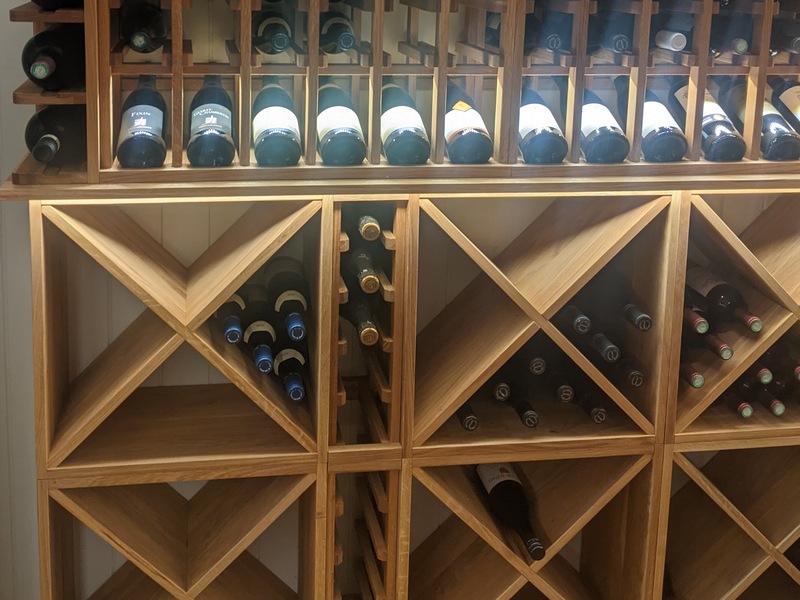
7. Does LED lighting make much difference?
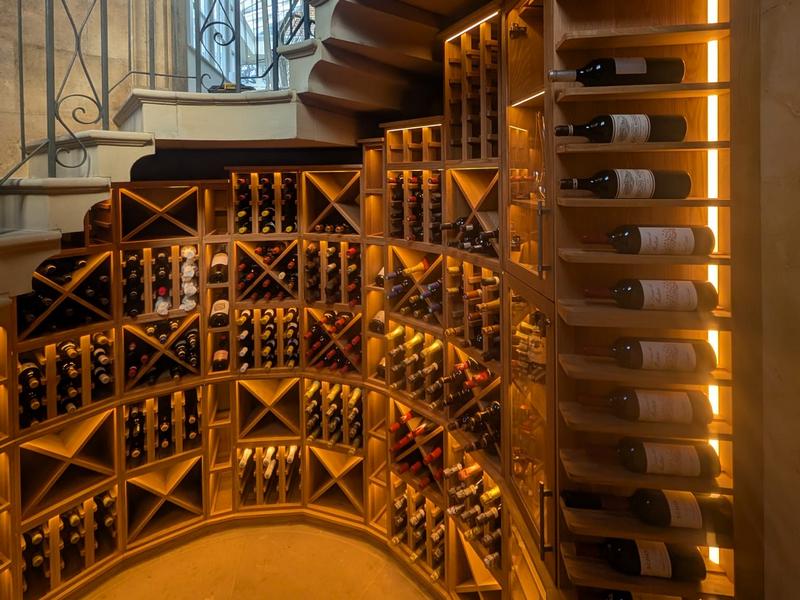
In our experience, it can make an enormous difference, particularly when the wine rack is intended to be a feature rather than simply somewhere to store bottles.
One of the questions we regularly hear is whether the entire installation needs lighting. The answer is no.
A few carefully positioned LED strips can be remarkably effective. Lighting beneath shelves or above display rows will highlight the bottles without overpowering the room.
Warm-white LEDs tend to complement natural timber beautifully, while cooler white lighting offers a more contemporary appearance.
If you’re considering lighting, it’s best to decide early. That allows the wiring, profiles and power supplies to be incorporated neatly into the design.
8. Do I actually need a refrigerated wine cellar?
Not everyone does, and this is an important distinction to make before spending money.
An open wine wall is primarily a storage and display feature. It can look spectacular and may incorporate one or more temperature-controlled wine fridges.
A fully refrigerated wine cellar is a different type of project. The room or enclosure needs to maintain suitable storage conditions, which means considering insulation, doors, glazing, cooling equipment and the thermal performance of the space.
If you’re storing valuable wines for extended periods, controlled conditions may be important. If your collection is mainly for regular enjoyment, an attractive wine wall with an integrated fridge might be a more proportionate solution.
For more information, read our guide to keeping your wine cellar at the correct temperature.
9. Can you add glass doors to an under-stairs wine rack?
Yes, although glazing changes the nature of the project quite considerably.
A glazed frontage can transform a relatively ordinary space beneath the stairs into a striking feature. It’s easy to understand the appeal, particularly when combined with attractive timber racking and subtle lighting.
However, the shape of the staircase, the position of the door and the way the glass is supported all need careful consideration.
If the space is going to be refrigerated, the specification becomes more demanding because the enclosure must also perform as a temperature-controlled environment.
These are generally bespoke projects, and it’s worth discussing the design before committing to a particular glazing arrangement.
10. Can you supply and install the whole project?
For many customers, having the materials and installation considered together makes the process much simpler.
Fitting requirements vary according to the size and complexity of the project, particularly where refrigeration, glazing or lighting are involved.
It’s helpful to tell us at the beginning whether you’re looking for a supply-only solution or would like installation included in the quotation.
That way, we can consider the practical details from the outset rather than treating fitting as an afterthought.
Where should you start?
Having spoken to so many people at the early stages of planning their wine storage, one thing is clear: most customers don’t arrive with a finished design in mind.
They know they have a space, a collection of wine and an idea of how they’d like it to look. The details come later.
That’s absolutely fine. You don’t need to have all the answers before getting in touch.
Start with a couple of measurements, a photograph of the space if possible, and an idea of your budget. We can help you explore what’s practical from there.
Whether you’re considering a traditional solid oak wine rack, a modern wine wall or a complete cellar installation, we’re always happy to discuss the possibilities.
Contact Wine Racks UK to discuss your project, or use our online Wine Rack Helper for an initial materials estimate.